
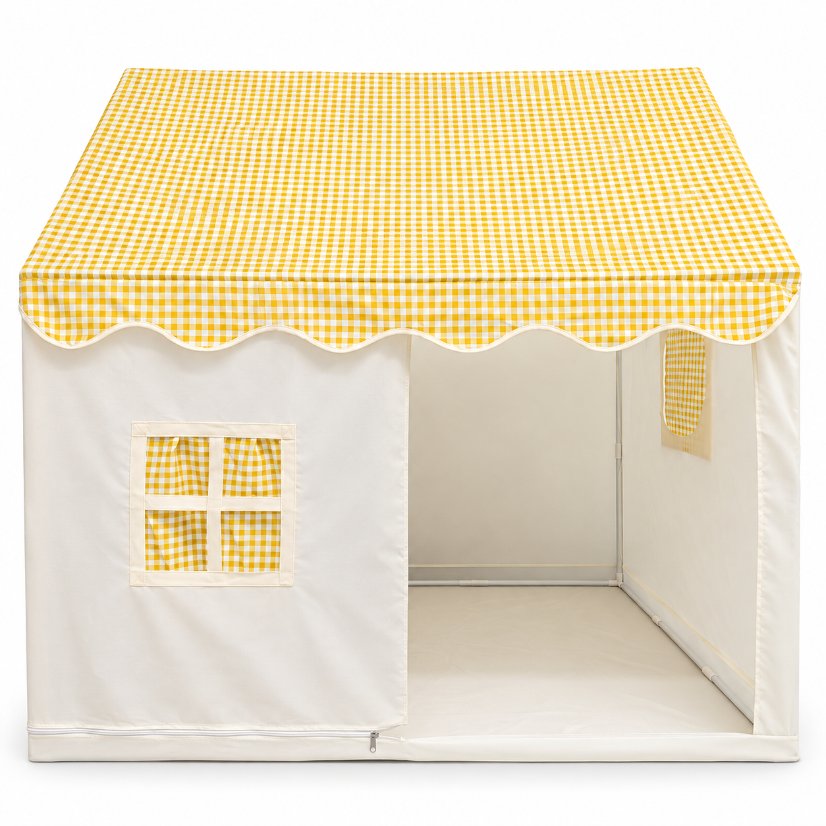
Specify a playhouse tent door and window layout by naming each wall, defining the direction from which it is viewed, and linking every requested opening to a labelled sample image. Ask the supplier to confirm the quoted arrangement on all sides. Approve opening positions and their visible treatments separately from roof pattern, packaging artwork and any required product assessments.
Define the front before describing left and right
A buyer and supplier can use the same words while picturing different walls. Front may mean the side with the entrance, the side shown on a carton, or the face towards the camera. Begin the RFQ with a statement such as front means the exterior face viewed while facing the intended entrance. Ask the supplier to confirm that reference direction before discussing alterations.
Yijia Leisure’s Playhouse Tent catalogue image shows a house-like form with a yellow check roof, a visible window and an open entrance. That picture is useful for identifying the inquiry. It does not describe every unseen surface or prove that the photographed arrangement is the only version offered. Attach the reference and mark which visible face your layout instructions concern.
Use wall labels rather than relying on a single angle
Assign simple wall labels to a buyer sketch, then request corresponding supplier views. For example, wall A can be the agreed front, followed by walls B, C and D around the outside. Show the direction in which the labels continue. The labels describe your communication system, not a statement that the product has four interchangeable panels or a particular manufacturing construction.
A supplier response should identify which wall appears in each image. A second angled photograph can help relate adjoining faces, while a direct view can make the opening arrangement clearer. If a wall remains unseen, leave its entry in the layout schedule unanswered. Do not copy an opening from the opposite side because symmetry seems likely from the overall shape.
Build a wall schedule for the quotation
A short wall schedule turns visual preferences into questions that can receive explicit answers. Keep the photographed reference separate from the requested order version. If you want a change, describe it in the request column and ask the supplier whether it is offered. A buyer sketch is a proposal until the supplier confirms the version and provides an appropriate sample record.
Layout entry | Buyer records | Supplier confirms
Reference direction | Exterior view facing the named front | The matching front and wall labels
Entrance location | Wall label and requested position | Offered position on the quoted version
Window appearance | Wall label and reference photograph | Visible opening and treatment for that wall
Unseen wall | Question remains open | A labelled view or written description
Proposed alteration | Clearly marked difference from the reference | Whether it is offered and what sample changes
Describe the treatment as well as the opening
Two windows can occupy a similar position but have different visible treatments. Ask the supplier to identify what is shown at the opening, including any pictured covering, trim or division detail. Use neutral descriptions that a photograph can support. Do not identify the composition of a panel or covering from its colour, texture or apparent transparency.
If a catalogue photograph shows an entrance open, ask for the supplier’s description of the intended closed appearance if one is offered. State whether your approval concerns the opening’s location, its visible outline, or a proposed closure detail. Request a matching image for each relevant state. This avoids treating an open doorway photograph as confirmation of an unseen fastening arrangement.
Keep pattern placement distinct from wall layout
Roof checks, trim colours and window positions are different approval subjects. A buyer may accept the window layout while still discussing the pattern or colour reference. Record those decisions separately so a roof-pattern change does not silently reopen a confirmed entrance location, or a layout change does not imply acceptance of a different visual treatment.
Request neutral, adequately visible sample photographs for colour and pattern discussions. Screen images can guide identification, but they do not establish a physical colour match or the composition of the fabric. If a physical reference is required, agree with the supplier how it will be identified and approved. Keep that reference linked to the layout version rather than relying on a catalogue name alone.
• Write the viewing direction beside every front, left and right instruction.
• Mark the requested layout and distinguish it from the existing catalogue photograph.
• Leave unseen-wall questions open until a specific supplier response arrives.
• Approve the entrance and window schedule separately from pattern and colour references.
Carry the approved map into the sample record
When the supplier responds, collect the confirmed wall schedule and labelled photographs under one sample identifier. Note which proposed changes were accepted, declined or left unresolved. The final quotation should point to the approved layout version. An email saying same as picture is insufficient when several pictures or revised drawings have been exchanged.
Also distinguish the article’s appearance record from other requirements your purchase may need. A layout photograph does not verify age suitability, material identity, testing or a destination-market requirement. Request any necessary documentation for the specific quoted product through a separate review. The purpose of the wall map is to make the agreed visual arrangement clear and traceable, without turning it into evidence for unrelated claims.
Frequently asked questions
Is the catalogue front automatically the entrance side?
Do not assume so. Define the front in your inquiry and ask the supplier to confirm it. The chosen direction should remain the same in the wall schedule, sample photographs and quotation reference.
Can a front photograph establish the back-wall window layout?
No. Request a corresponding rear view or written supplier confirmation. Mark an unseen wall as unresolved rather than inferring that it repeats the visible arrangement.
How should a buyer request a mirrored arrangement?
Provide a clearly labelled proposed drawing and show the viewing direction. Ask the supplier whether the alteration is offered for the quoted item. Approval should refer to the confirmed sample version, not merely to the word mirrored.
Does a layout approval also approve materials or product suitability?
It confirms only the appearance details included in the agreed record. Materials, suitability, testing and other purchase requirements need their own supplier statements and appropriate evidence. Keep those decisions distinguishable in the order file.
Product and contact references
Catalogue reference: confirm matching item: https://yijialeisure.com/product/%e5%b0%8f%e6%88%bf%e5%ad%90/
Related catalogue reference: https://yijialeisure.com/products/?product_filter=%e5%84%bf%e7%ab%a5%e5%b8%90%e7%af%b7
Contact Yijia Leisure: https://yijialeisure.com/contact/
Yijia Leisure blog: https://yijialeisure.com/blog/