
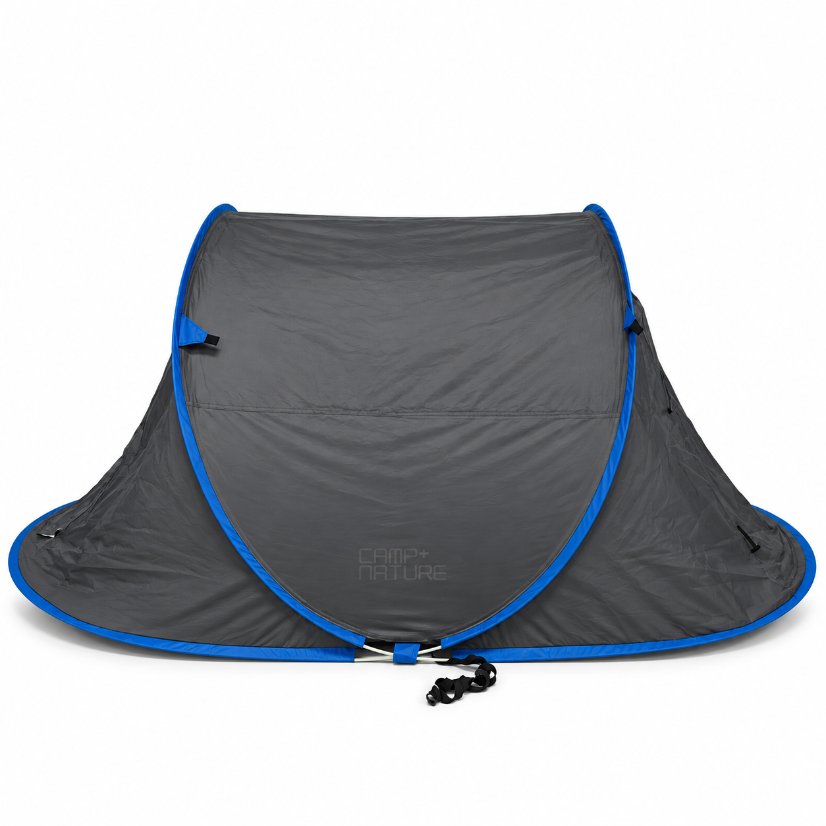
Label each boat-shaped tent sample photograph with the item reference, the supplier-confirmed product state and the viewing direction. Keep catalogue appearance, any offered display configuration and the packed configuration as separate records. Ask the supplier to explain how those views relate to the same quoted item before approving photographs, packaging references or a repeat-order sample.
A product name does not identify its photographed state
Yijia Leisure lists a Boat-Shaped Tent and illustrates a dark-grey item with blue-looking edging, a broad visible panel and lower strap details. These visible features help identify the catalogue reference. They do not tell a buyer whether a view represents a particular open, closed, folded or display condition. Ask the supplier to name the condition shown rather than assigning a state from the outline alone.
This distinction matters when purchasing, merchandising and packaging teams share photographs. A photograph selected to identify an item may later be used as a packing example without anyone confirming its meaning. Give the initial catalogue picture a neutral reference label. Add a state description only after the supplier explains what it shows for the item being quoted.
Request a state record instead of guessing from shape
Prepare a list of the views needed for your purchase. Start with the catalogue reference, then ask which additional states the supplier offers or can document for the quoted version. If a display configuration and a packed configuration are relevant, request separate photographs for them. Do not describe either configuration as an included feature until the supplier confirms it.
The supplier should connect those photographs through an item identifier and sample version. Ask for a simple explanation of visible differences between views, including whether an opening, panel or loose-looking element is being shown in a different position. This is a request for product identification, not an instruction to operate or modify the sample. Obtain the supplier’s appropriate instructions separately where needed.
Keep state and viewing direction in different fields
A front view and a side view describe camera positions. Open and packed describe product conditions. Combining both into a vague label such as side setup makes later comparisons difficult. Use separate fields for the state and the camera direction, and ask the supplier to define the reference front for the photographed item. An image can then change angle without appearing to represent a new configuration.
If an area is hidden, request another view rather than interpreting the hidden structure. A photo of a broad panel cannot establish the interior arrangement, and a visible strap cannot establish its function or whether it is supplied as pictured. Mark those details as supplier questions. Keep an unanswered state or component description visibly pending in the sample record.
Photograph record | What the buyer can use it for | Question to resolve
Catalogue reference | Identify the product being discussed | Which quoted item and pictured state does it represent?
Supplier-confirmed display state | Discuss the agreed visible configuration | Which view direction and sample version are shown?
Packed-state reference | Discuss the actual offered packing arrangement | Is this the packing state covered by the quotation?
Additional detail view | Identify a marked panel or element | Where does this detail belong in the complete view?
Approve packaging imagery against the right reference
A retail carton or listing may need to show a different condition from the condition in which the item is packed. State what each image is intended to communicate. If a buyer proposes an illustration of a display configuration, ask the supplier to confirm that it matches the offered item and to identify any conditions or parts that the image would need to explain.
Do not derive packed dimensions, package contents or assembly promises from the catalogue picture. Request the supplier’s actual packing description for the quoted version. If those details have not been provided, keep the packaging artwork provisional. A visually attractive image is not a substitute for confirming the packing arrangement or the relationship between the pictured configuration and the supplied product.
Use a comparable reference when reviewing another sample
When the supplier sends a later sample photograph, first compare the state and direction labels with the approved record. A changed outline may come from a different viewpoint or condition, so ask the supplier to explain the difference before classifying it as an item change. Equally, an unchanged catalogue photograph does not establish that the latest physical sample is unchanged.
Request a like-for-like view when a particular appearance needs comparison. Keep the item reference, state label and sample version in the response so the review does not depend on memory. Where a proposed alteration is confirmed, retain the new record and the reason for the revision. Do not silently replace the approved picture with a photograph whose state has not been identified.
• Use a neutral catalogue-reference label until the supplier identifies the pictured condition.
• Record product state separately from the camera direction for every comparison view.
• Keep display imagery and the quoted packed configuration distinguishable in the order file.
• Ask for a matching-state photograph when a later sample cannot be compared fairly.
Limit the approval to what the record actually confirms
State approval can confirm that both parties are discussing the same visible configuration. It does not verify waterproofing, wind resistance, UV protection, structural performance or material composition. Colour, apparent coverage and the shape of a panel cannot establish those properties. If a purchase requires them, define the requirement and request appropriate supplier evidence for the exact quoted item.
Before issuing the order, check that the sample record and quotation refer to the same product version. Retain unresolved questions about the photographed state, unseen parts or packing description as open items. The useful result is a clear reference set that the supplier has identified and the buyer understands, with appearance decisions separated from unsupported assumptions about operation or performance.
Frequently asked questions
Can the boat-shaped product name establish how the sample is displayed?
No. Treat the name as an item-identification reference and ask the supplier to describe the photographed condition. The label alone does not establish how a sample is opened, folded, packed or used.
Should a sample’s front view be the same as its packed view?
Those labels describe different things. Front identifies a camera direction; packed identifies a product condition. Record both fields where applicable and request separate photographs when the intended references differ.
What if two sample photographs have different outlines?
Check their state labels, viewing directions and item versions first. Ask the supplier for an explanation or a comparable photograph. Do not assume that the difference proves either a changed product or an unchanged product.
Does an approved appearance image establish outdoor performance?
No. Appearance and state records do not verify weather resistance, protection ratings or structural performance. Define any required performance questions separately and request evidence for the specific quoted configuration.
Product and contact references
Catalogue reference: confirm matching item: https://yijialeisure.com/product/%e8%88%b9%e5%9e%8b%e5%b8%90/
Related catalogue reference: https://yijialeisure.com/products/?product_filter=%e8%88%b9%e5%9e%8b%e5%b8%90%e7%af%b7
Contact Yijia Leisure: https://yijialeisure.com/contact/
Yijia Leisure blog: https://yijialeisure.com/blog/